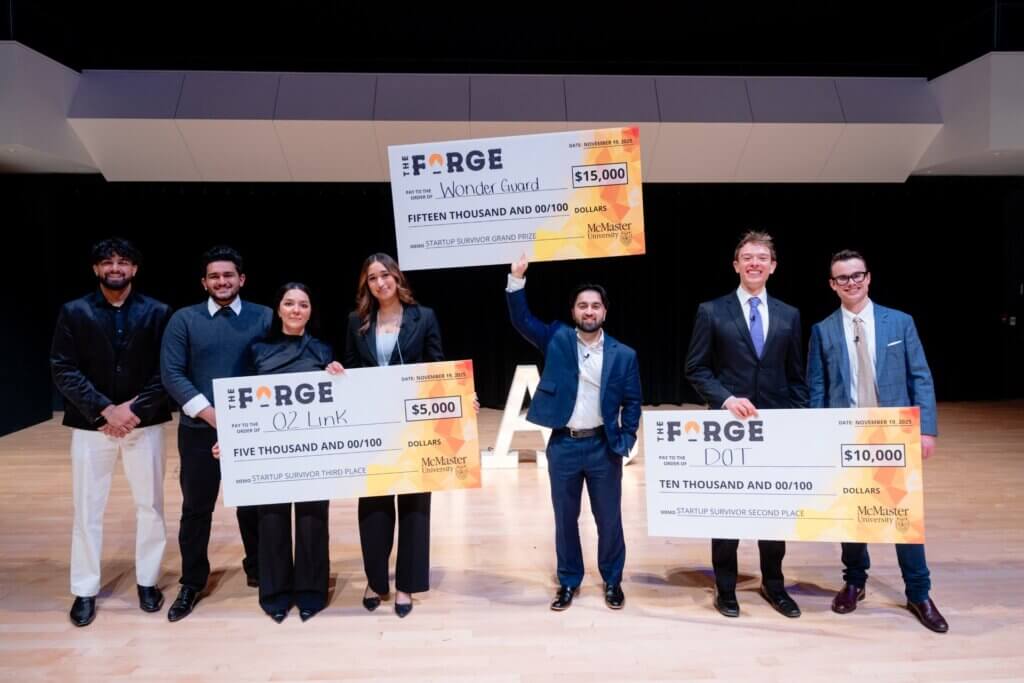
A PhD student developing technology to make urinary tract infections (UTIs) easier to detect won first place at the annual Startup Survivor Pitch Competition.
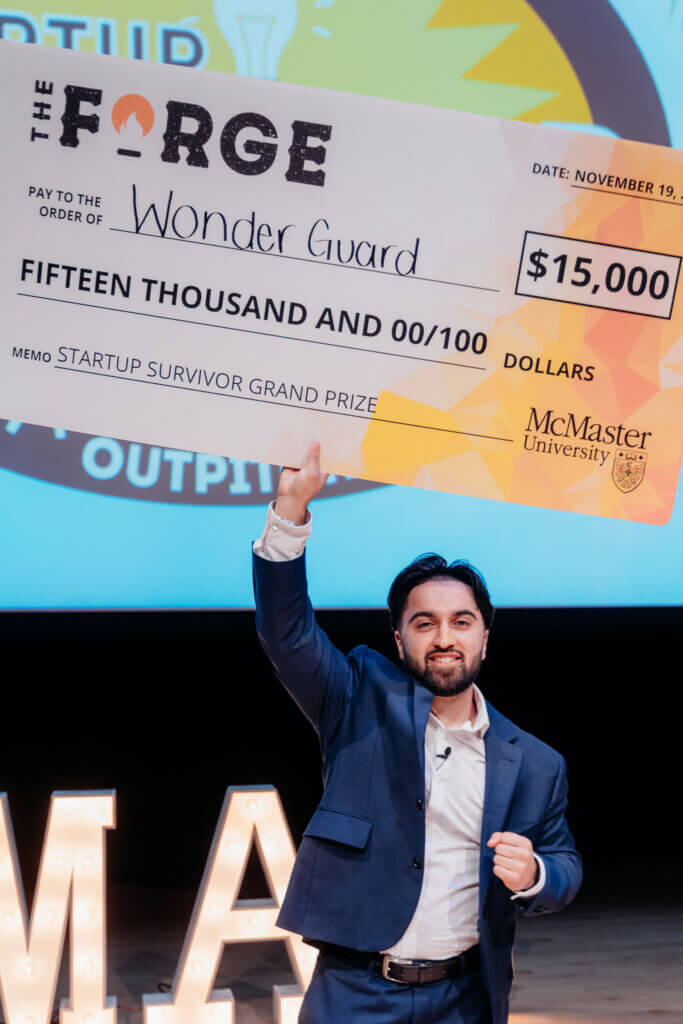
Manak Bajaj won $15,000 for Wonder Guard, a smart catheter bag powered by artificial intelligence that rapidly detects the presence of bacteria that cause UTIs.
The spark for Wonder Guard came from a “deeply personal place” when his mother was hospitalized for what should have been a routine procedure, Bajaj told the judges on Wednesday evening during his pitch.
“A simple catheter led to repeated infections, and what should have been a few days in the hospital turned into weeks of pain, antibiotics and fear,” said Bajaj.
“Watching her suffer, not from her illness, but from an infection that never should have happened, made me realize how urgently we need to change urinary health care.”
Bajaj was one of five finalists who presented during the event that wrapped up a four-month accelerator program from the Forge. The top three pitches were awarded a total of $30,000.
Commerce student Aaron Roodhart’s venture called DOT, a pen-and-paper notebook that integrates analog journaling with digital memories like photos and videos, claimed the second-place prize of $10,000.
Sajroop Mann and Selay Momand placed third and won $5,000 for their pitch for O2Link, a smart platform that offers real-time monitoring and automation of oxygen therapy.
Announcing the winners, judge Mitch Wilson assured the finalists that these were the some of the strongest pitches out of the hundreds the judging panel has seen.
“Even if you’re not one of the winners tonight, don’t take that as an input on how your business viability might be in the future,” said Wilson, who co-founded the medtech company Mariner Endosurgery with the support of the Forge’s business incubator program.
“All five of you should be very pleased with how you performed tonight, and if you don’t win here, go to another pitch competition because your odds look pretty good.”
Meet the 2025 Startup Survivor winners and finalists
Wonder Guard | Pitched by Manak Bajaj, graduate of the Health, Engineering, Science and Entrepreneurship program; currently a biomedical engineering PhD student
Wonder Guard is an AI-powered catheter bag equipped with DNA biosensors that detects the bacteria that causes urinary tract infections within minutes. This innovation replaces traditional three-day urine cultures, enabling proactive infection treatment or even prevention and significantly improving patient safety.
Along with winning Startup Survivor, Wonder Guard got the highest score in the Forge’s summer program, which earned Bajaj $5,000 from the Sam and Roma Mercanti Foundation.
Wonder Guard also nabbed $10,000 in the Arena pitch competition from Saint Mary’s University earlier this year.
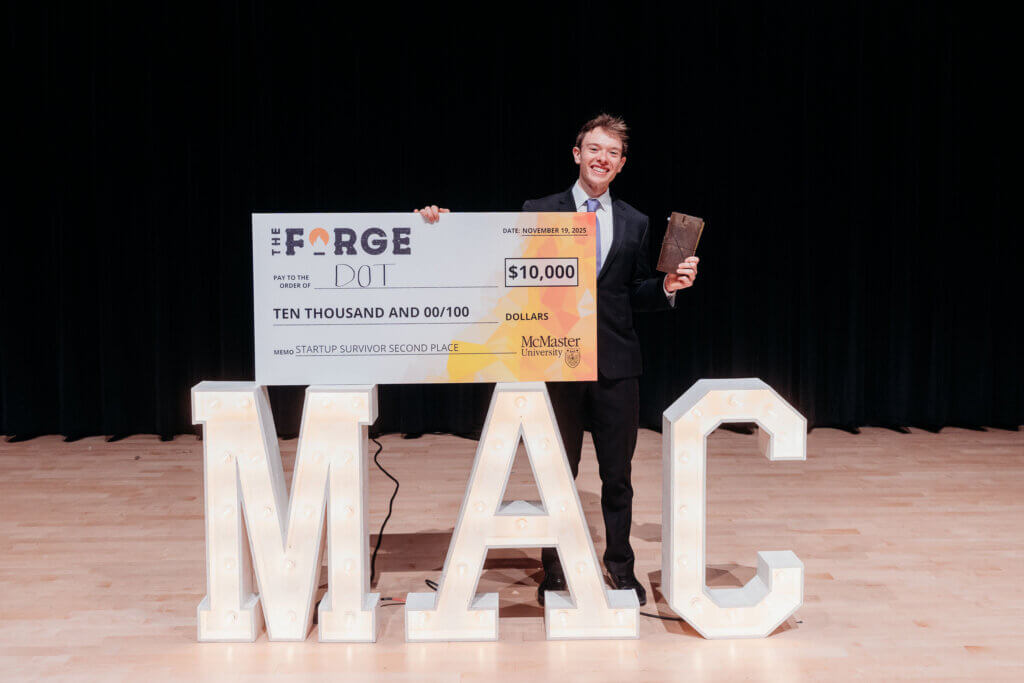
DOT | Pitched by Aaron Roodhart, undergraduate student at the DeGroote School of Business
DOT is a paper journal that blends the timeless experience of writing with a pen and paper with the power of digital memory. Using embedded NFC tags, any page can seamlessly link to photos, videos, songs or files, letting users capture their full story without giving up the tactile joy of handwriting.
DOT has sold over 200 of its prototype leather-bound journals, with beta testers noting a 73 per cent increase in their journaling habits.
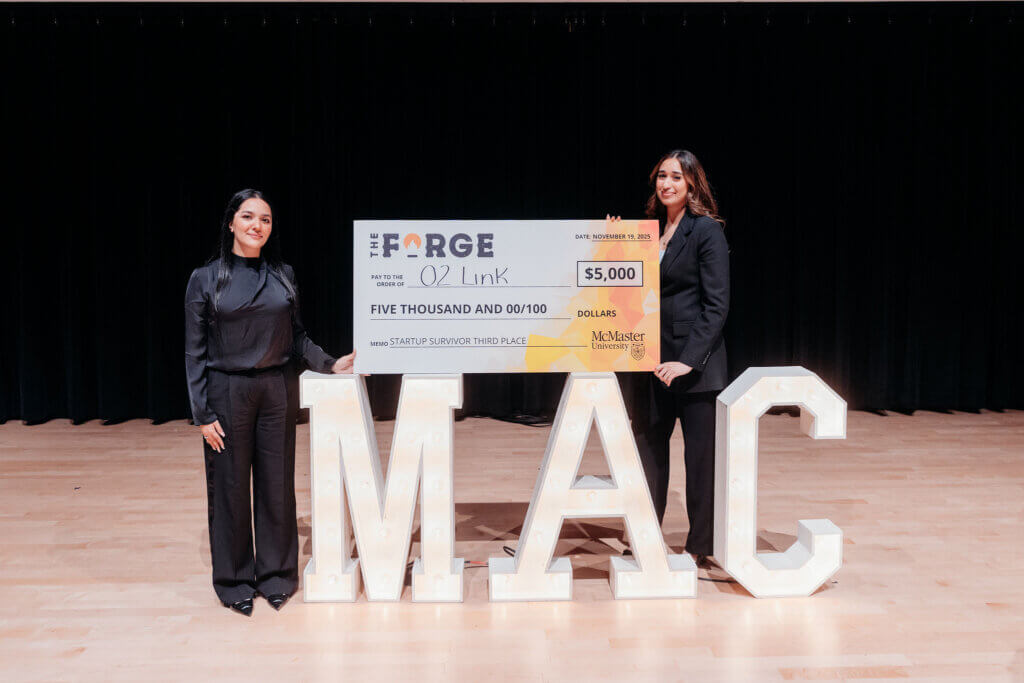
O2Link | Pitched by Sajroop Mann, graduate from the Master of Biomedical Innovation program
O2Link is redefining the standard of care for oxygen therapy by replacing outdated flowmeters with a personalized, data-driven system.
Unlike current solutions that blindly automate the system, O2Link ensures the correct dosing of oxygen through real-time monitoring, predictive analytics, and automated weaning.
It reduces a clinician’s manual workload by more than 89 per cent, decreases patient hospital stays by over 40 per cent and cuts hospital costs by $150,000 per bed annually.
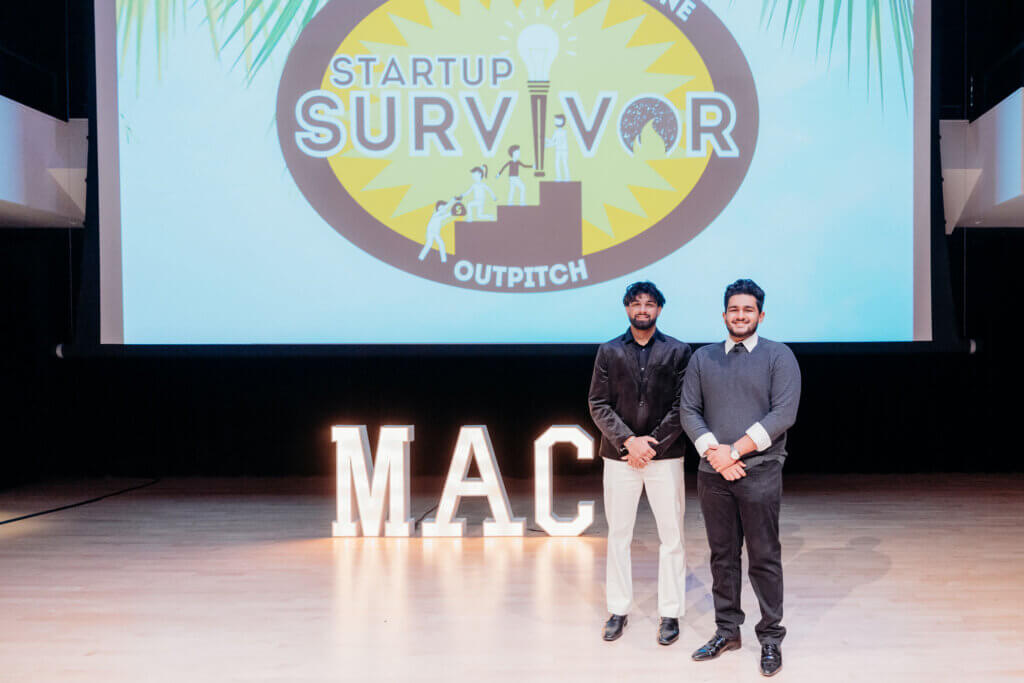
Innovo Surgica | Pitched by Manvir Bhangu, graduate of the Integrated Biomedical Engineering & Health Sciences (iBiomed) program, currently pursuing his Doctor of Medicine
Innovo Surgica is developing a new tool for spinal surgeons that aims to prevent tears in the protective layer of tissue around the spine called the dura. Accidental dura tears happen during approximately 10 per cent of spinal surgeries and cost hospitals $10,000 per incident – and the cost is even higher for patients who may endure long term health impacts like permanent pain, paralysis, or even death. This tool minimizes the risk of those tears, ultimately reducing hospital costs and improving patient outcomes by 50 per cent.
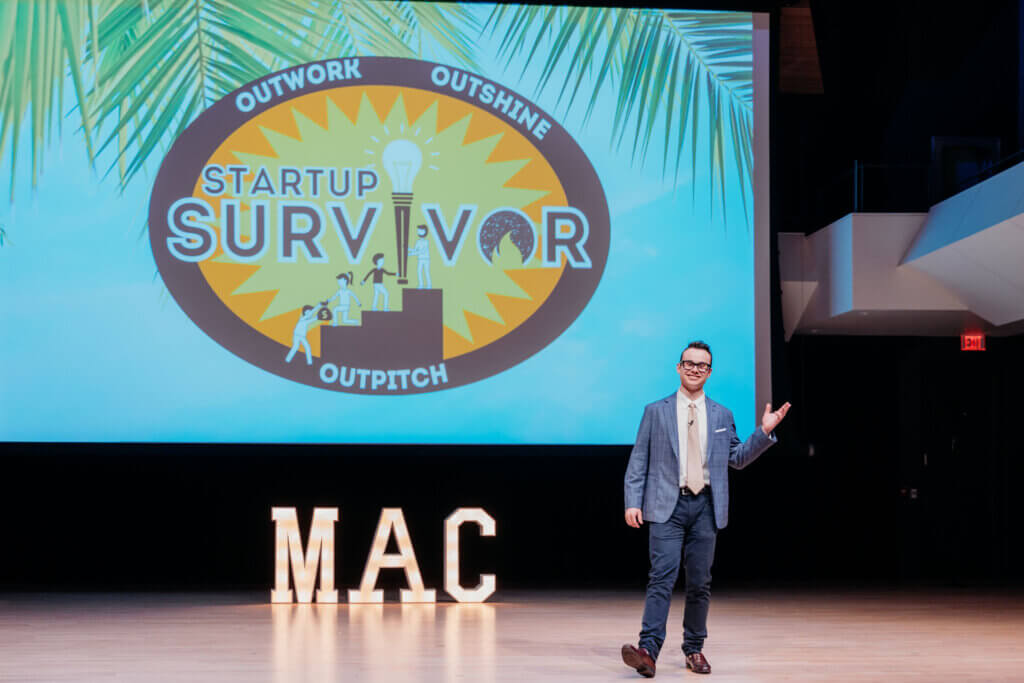
NeuroSpritz | Pitched by Lucas Monter, undergraduate student in the Integrated Science program
NeuroSpritz is transforming how brain activity is measured. EEG tests — which are used to diagnose conditions like epilepsy and Alzheimer’s — can take nearly an hour per patient, leading to long wait times in clinics.
NeuroSpritz’s technology uses wireless, spray-on sensors and smart software to cut setup time by up to 80 per cent. This makes brain testing faster, more comfortable and more accessible for patients and researchers.
Monter’s pitch for NeuroSpritz won $4,500 through the pitch competition for the Clinic’s Innovation Residency program on Tuesday, following six months of mentorship and coaching, real-world testing and venture development.
The five finalists who pitched during the competition were among 10 total startups that tackled a series of tough business and technical challenges during the four-month program, said Mariya Leslie, manager of student entrepreneurship at the Forge.
“The goal of Startup Survivor is to equip students with practical skills — innovative problem solving, storytelling, and resilience — because these are the building blocks of every successful business,” said Leslie.
The program is “super rigorous,” Bajaj said, with tough deadlines and pressure to succeed but noted that it has all contributed to the betterment of his venture.
The Forge’s mentorship team and his supervisor, Leyla Soleymani, were instrumental in helping him get to where he is with Wonder Guard, he said.
What advice does he have for anyone thinking of following the entrepreneurial path?
“Really hone in on the product to fit the market. There’s great tech being developed, so find your niche and from there, expand.”
Interested in launching your own business venture? Applications are now open for next year’s Startup Survivor – find out more here.